by Nicholas DeYoung
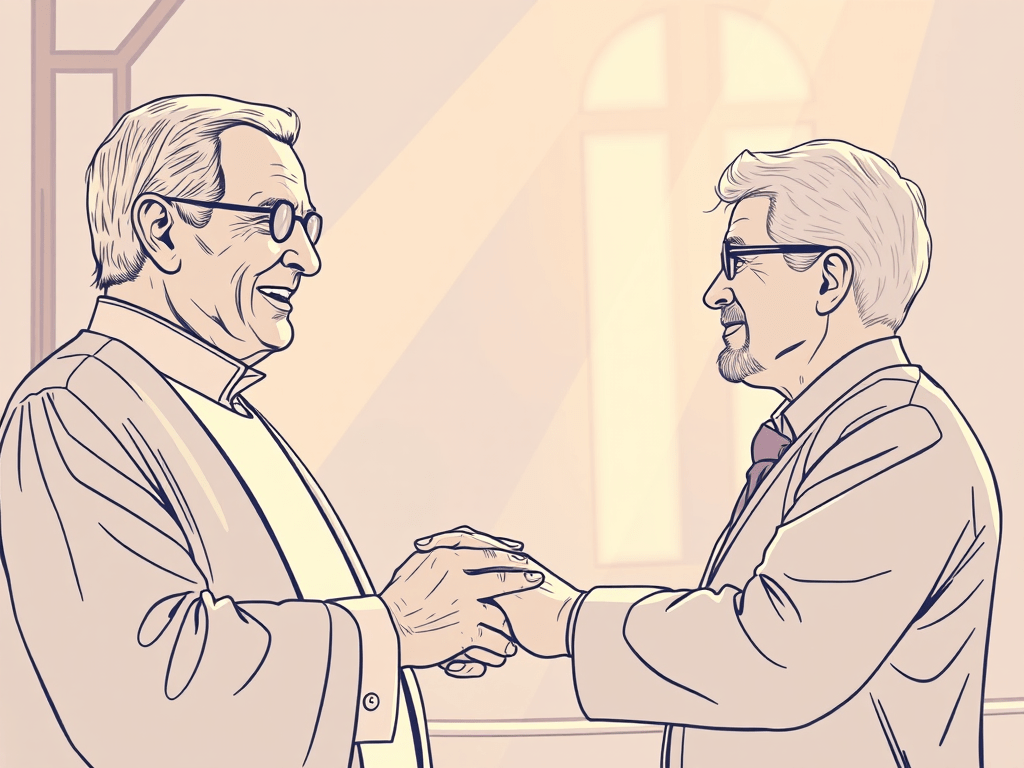
When I became the lead pastor of our church five years ago, I knew I was stepping into something with deep roots. My predecessor had served faithfully for thirty-five years. His leadership helped shape the DNA of the church, his sermons stitched into the spiritual fabric of generations. I was honored to take up the baton—not to replace him, but to continue the race in a new leg of the journey.
Now, five years in, I’m more convinced than ever that this is where God has called me to serve. I feel a deep sense of commitment to our people, a love for the mission we share, and a vision for the kind of church we’re becoming. But I’ve also realized something along the way: even when you’re planted and invested, you can still find yourself leading in the tension between what was and what is still forming.
And in that tension, there’s holy work to be done.
The Lingering Weight of a Long Legacy
Transitions don’t follow a calendar. Just because a new pastor is installed doesn’t mean the church is done adjusting. Some legacies are long shadows—not because they’re oppressive, but because they were full of light. That’s what I inherited. A beloved shepherd had led faithfully for over three decades, and his absence created more than a vacancy—it kicked off a time when we were all asking, “What now?”
In many ways, I’ve felt like a bridge—not a temporary one, but a purposeful one. I’ve spent these years helping our community grieve, heal, and find its identity in Christ again—not just in what we used to be, but in who we are now. That’s not a passive assignment. That’s real pastoral leadership. It’s what I’ve poured my heart into—and continue to.
I don’t consider myself an interim pastor. I never have. I’ve been called to lead, and I’m doing so with everything I’ve got. But I also know this: good leadership always builds with the future in mind. Not out of fear or uncertainty—but out of faith and stewardship.
Holding Confidence and Curiosity
Sometimes people ask me, “How long do you see yourself staying?” And I tell them the truth: I’m here. Fully. I’m not looking to go anywhere. I feel at peace in this role. I have vision for the road ahead. But I also hold my calling with open hands, because I’ve learned that God often uses our faithfulness in one season to prepare the way for the next—whether that next season is ours to lead or ours to prepare for someone else.
That isn’t a threat to stability. It’s the posture of every leader who understands that the church belongs to Christ, not to us. I’m not going anywhere unless the Spirit makes that abundantly clear—and even then, I’d walk slowly, with wisdom and counsel. But I do want to lead in such a way that, whether I’m here for five more years or twenty, the church continues to grow in health, trust, and mission.
Shepherding in the Slow Work
One of the quiet truths about post-legacy leadership is that the work can feel invisible at times. You’re not just preaching and pastoring—you’re tending to unspoken expectations, subtle grief, and relational history that predates you. You’re slowly helping people believe again—not just in you, but in the future.
In one of those early weeks, a long-time member pulled me aside and said something I’ll never forget: “You don’t have to be the last pastor. We need you to be you.” That simple statement brought such freedom. It reminded me that while the past was beloved, the church wasn’t asking me to imitate it. They were asking me to lead—with my voice, my convictions, and my heart. That kind of affirmation—spoken with grace—has continued to guide how I show up each week.
And five years in, I can say with joy that trust has grown. Ministry has deepened. Our church is finding its voice in a new season—and I’m humbled to be part of that.
Not a Placeholder—A Pastor
Let me say this plainly: I’m not a placeholder. I don’t see myself as a temporary fix or a leadership stopgap. I see myself as a pastor, called for this season, fully present in the life of our church. But I also believe that faithful leadership asks, “What am I building—not just for today, but for tomorrow?”
That conviction is part of what led us to make the shift to co-vocational ministry. After years of leading full-time, we chose to restructure my role—intentionally—so that more people in the church could share in the ministry. It wasn’t about stepping back; it was about making room. When I stepped into a co-vocational rhythm, it allowed others to step forward—to teach, to shepherd, to lead, and to discover their own spiritual authority. In a very real way, the role of “pastor” was gently moved from the center and redistributed back into the community where it belongs. The result has been more ownership, deeper discipleship, and a healthier church culture where the work of ministry is shared—and multiplied.
Maybe, in some ways, I’ve been helping to lay the groundwork for a future I won’t fully see. That’s not a sign of instability—that’s a mark of mature leadership. The healthiest pastors don’t cling to the role; they steward it. And they create the kind of culture that can thrive beyond their tenure, whenever that time comes.
If I’m here for many more years—and I hope I am—I want to keep leading with vision, clarity, and humility. If someday God calls me to release this work to another, I want to be able to bless that moment with open hands, knowing the church is strong and well-loved.
Leading Through Legacy, With Hope
Some of you reading this may find yourselves in similar shoes. You’re not in an official “interim” position, but you’re leading after a long season of history and memory. You feel the weight of what came before you and the uncertainty of what might come next. Maybe people still compare you to your predecessor. Maybe you wonder if you’ll ever be fully seen as the pastor, not just the “next guy.”
If that’s you, keep showing up. Keep loving the people. Keep casting vision gently but persistently. Keep naming the grief and lifting up the hope. You don’t have to be loud or flashy—just faithful.
This isn’t a holding pattern. This is the good, hard, holy work of real leadership. You’re not just tending what was—you’re tilling what will be.
And if we keep leading with that kind of clarity, we’ll see the fruit. Maybe not all at once. Maybe not all during our tenure. But God is always working—often most powerfully in the transitions.
So plant well. Lead with confidence. Stay open to the Spirit. And trust that whether you’re here for this season or many more to come, your leadership is shaping the future.
Not as a placeholder.
But as a pastor.

 Inkpad Coaching Lab
Leave a comment